
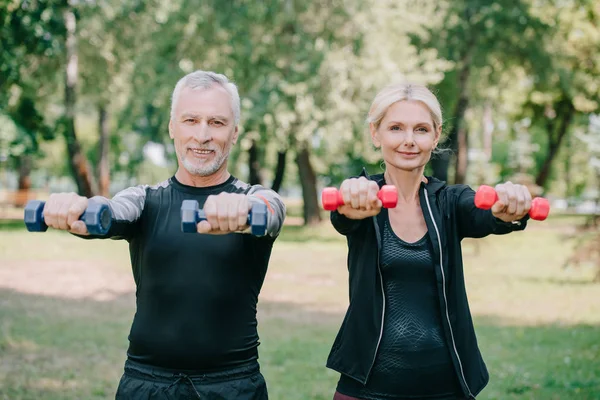
You hit the gym hard in your 20s and 30s. Push through pain. Grind out reps. Ignore the ache. That worked then. Now? That same approach is why your shoulder clicks when you reach for the top shelf, why your lower back stiffens after an hour sitting, and why you’re sidelined for three days after a heavy leg day.
The common misconception is that fitness after 40 requires more grit, more volume, more intensity. The truth is the opposite. The single biggest variable separating people who stay strong past 40 from those who break down is recovery management. You don’t need to train harder. You need to recover smarter.
Why Your 20s Training Style Fails You Now
At 25, your body clears metabolic waste, repairs micro-tears, and regulates inflammation like a well-funded municipal works department. By 45, that department is on a budget. Inflammatory markers like IL-6 and TNF-alpha stay elevated longer after exercise. Cortisol recovery takes 20-30% more time. Your nervous system needs more rest between high-output sessions.
The failure mode here is simple: you keep training like you’re 25. You run the same 5×5 program. You do CrossFit five days a week. You ignore the creeping joint soreness. Then one day you tweak your back deadlifting 315, and you’re out for six weeks.
What to do instead:
- Drop training frequency for any given muscle group from 3x to 2x per week
- Reduce total weekly volume by 20-30% from your 30s baseline
- Add one full rest day between any two strength sessions
The tradeoff: you might not chase PRs every month. But you’ll still be lifting at 55 while your buddies are getting MRIs.
The Three Pillars of Recovery for Over 40s
Recovery isn’t passive. It’s an active process with three measurable inputs. Ignore any one, and the other two can’t compensate.
Sleep: The Non-Negotiable Foundation
Adults over 40 average 6.5 hours of sleep per night. For muscle repair and hormone regulation, you need 7.5-8.5 hours. Growth hormone secretion, which peaks during deep sleep (stages 3 and 4), drops by 50-70% after 40 if sleep is fragmented. Even one night of 6 hours reduces protein synthesis by 18% the next day.
Practical fix: set a hard bedtime 8 hours before your alarm. No phone in the bedroom. Keep the room at 65-68°F. If you wake up at 3 AM and can’t fall back asleep in 20 minutes, get up, read a paper book for 15 minutes, then try again.
Nutrition Timing
Your post-workout window matters more now than it did at 30. Muscle protein synthesis stays elevated for 24-48 hours after training, but the initial 2-hour window is where you get the most bang. Aim for 30-40g of protein within 90 minutes of finishing your session. Real food works fine: Greek yogurt, chicken breast, eggs, or a whey shake. Don’t overthink the anabolic window hype — just don’t skip it entirely.
Active Recovery vs. Complete Rest
Complete rest days are fine if you feel beat up. But active recovery — 20-30 minutes of walking, light cycling at zone 2 heart rate (120-130 bpm for most), or mobility drills — increases blood flow to sore muscles by 40% and reduces DOMS duration by 24 hours. The key is intensity: if you can’t hold a conversation, you’re working too hard.
Joint Health: The Real Limiting Factor
Your muscles can grow at any age. Your joints have a finite number of pain-free cycles. The average 45-year-old has lost 10-15% of cartilage thickness in weight-bearing joints compared to age 25. That’s not a death sentence. It’s a constraint you need to design around.
Common mistakes:
- Pressing through sharp joint pain (not muscle burn) — that’s a signal, not a challenge
- Using heavy loads on exercises with poor mechanical advantage (e.g., behind-the-neck pressing, upright rows)
- Neglecting eccentric control — lowering the weight slowly builds tendon resilience
For knee health: avoid deep squats below parallel if you have patellar pain. Stick to box squats at 90 degrees, or switch to split squats and step-ups. For shoulders: external rotation work with resistance bands (3 sets of 15, twice a week) reduces impingement risk by 60%.
Products worth considering: The TheraBand CLX ($18, continuous loop resistance bands) for rotator cuff work. The Hyperice Vyper 2.0 ($199, vibrating foam roller) for myofascial release before training. Not magic, but both have clinical data backing their use for reducing delayed onset muscle soreness by 20-30%.
How to Structure a Week of Training (Sample Schedule)
Here’s a realistic weekly template for someone over 40 who wants to maintain strength, manage joint stress, and not feel wrecked all the time. This is not a bro split. It’s a recovery-first approach.
| Day | Session Type | Duration | Key Details |
|---|---|---|---|
| Monday | Strength (Upper Push + Pull) | 45 min | 3 sets of 8-10 reps, 90 sec rest. Incline press, rows, lateral raises, face pulls. |
| Tuesday | Zone 2 Cardio | 30 min | Brisk walk or stationary bike at 120-130 bpm heart rate. |
| Wednesday | Strength (Lower Body) | 45 min | Goblet squats, Romanian deadlifts, calf raises. 3×10, 90 sec rest. |
| Thursday | Active Recovery / Mobility | 20-30 min | Yoga flow, hip openers, cat-cow, thoracic spine rotations. |
| Friday | Strength (Full Body) | 40 min | Lighter loads, 3×12. Focus on form and eccentric control. |
| Saturday | Outdoor Activity | 45-60 min | Hike, swim, or recreational sport. Low intensity, high enjoyment. |
| Sunday | Complete Rest | 0 min | No structured exercise. Walk the dog if you want. That’s it. |
This schedule hits 3 strength sessions, 2 cardio sessions, and 2 recovery-focused days. Total training time: about 3.5 hours per week. That’s enough to maintain muscle mass and cardiovascular fitness without burning out your joints or adrenal system.
When NOT to Push Through Pain
There’s a difference between discomfort and danger. The old gym culture says “no pain, no gain.” That advice is actively harmful after 40. Here’s the distinction:
Safe discomfort: muscle burn during the last 2 reps of a set. Heavy breathing. Mild soreness 24-48 hours post-training that resolves on its own.
Danger signals (stop immediately):
- Sharp, stabbing, or electric pain during movement
- Pain that radiates down a limb (e.g., shooting down your leg during a squat)
- Joint pain that worsens as you continue, rather than fading with warm-up
- Swelling, redness, or loss of range of motion after an exercise
If you feel any of the danger signals, stop that exercise for the day. Sub in a different movement that doesn’t provoke the pain. If it persists for more than 2 weeks, see a sports medicine doctor — not a chiropractor who wants to sell you a package of 12 visits.
The failure mode here is ego. You convince yourself that finishing the set proves toughness. It doesn’t. It proves you’re willing to trade long-term function for short-term validation. Walking away from a bad rep is a skill. Practice it.
Mobility Work That Actually Prevents Injury
Most mobility routines are garbage. Static stretching before lifting reduces force output by 5-30% for up to an hour. The warm-up should be dynamic, not passive.
Here’s what works, based on the NSCA’s guidelines for older athletes:
- Hip flexor mobility: half-kneeling hip flexor stretch (30 sec per side, 2 rounds) before any squat or deadlift variation. Reduces anterior pelvic tilt and low back strain.
- Thoracic spine extension: foam roller under upper back, 10 slow extensions. Counteracts the hunched posture from desk work.
- Ankle dorsiflexion: banded ankle mobilizations (10 reps per side). Poor ankle mobility is a primary driver of knee valgus and patellar pain.
- Shoulder internal/external rotation: 90/90 stretch with a dowel or resistance band. 10 controlled reps each direction.
Do these as part of your warm-up, not your cool-down. Total time: 8-10 minutes. The Rogue Monster Bands ($35 for a set of 3) are the standard for resistance band mobility work — durable, multiple resistance levels, and they don’t snap after a few months of use.
The One Supplement That Actually Helps Recovery
Most supplements for over-40 fitness are overpriced urine. Creatine monohydrate is the exception. Creatine is the most researched supplement in sports nutrition, with over 1,000 studies backing its safety and efficacy. For people over 40, it improves strength gains by 8-15%, increases lean muscle mass, and may even support cognitive function.
Dose: 5 grams per day. No loading phase needed. No cycling. Just take it every day with your post-workout meal or any meal with carbs (insulin helps transport it into muscle cells).
Which brand to buy: Optimum Nutrition Micronized Creatine Powder ($28 for 120 servings) or Thorne Creatine ($42 for 100 servings). Both are third-party tested by NSF or Informed Sport. Avoid proprietary blends, capsules (you’d need to swallow 10+ per dose), and anything with added flavors or fillers.
The tradeoff: creatine can cause mild water retention (1-3 lbs of intramuscular water). That’s not fat gain. It’s also not a substitute for proper training and nutrition. If you’re not sleeping enough or eating enough protein, creatine won’t save you.
The category is moving toward personalized recovery tracking — wearables like the Whoop 4.0 ($30/month subscription) now measure heart rate variability and resting heart rate to tell you when you’re actually recovered enough to train hard. That’s the future: data-driven recovery, not guessing based on how you feel after coffee.
Medical Disclaimer: This content is for informational purposes only and does not constitute medical advice. Always consult a qualified healthcare professional before making health-related decisions.