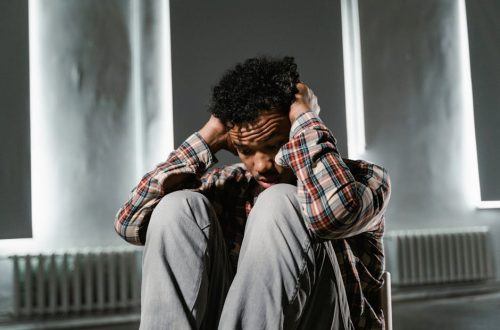
You’ve tried the gym. You’ve tried the meditation apps and the earlier bedtimes. The anxiety is still there — blunt and persistent — and nothing you’re doing solo seems to touch the social part of it.
That gap between general stress reduction and actual emotional recovery is where ballroom dancing consistently shows up in the research. Not as a cure. But as something that works through mechanisms most people haven’t considered.
This article is for educational purposes only and is not medical advice. If you are managing a diagnosed mental health condition, consult a licensed healthcare provider before changing your treatment plan.
Why Emotional Recovery Often Requires More Than Solo Exercise
Most exercise advice for emotional health centers on the same principle: move your body, reduce cortisol, release endorphins. All accurate. But for people dealing with social anxiety, emotional numbness after burnout, or low-grade depression following major life transitions, solo exercise often reaches a ceiling.
Here’s what running, cycling, or lifting alone doesn’t typically address:
- Physical touch — a documented mood regulator and oxytocin trigger that solo exercise doesn’t provide
- Real-time social feedback from another person in an ongoing interaction
- Coordinated achievement with a partner — a distinct form of social satisfaction
- Simultaneous cognitive engagement with music, rhythm, and movement
- A structured social environment that removes the pressure of improvised conversation
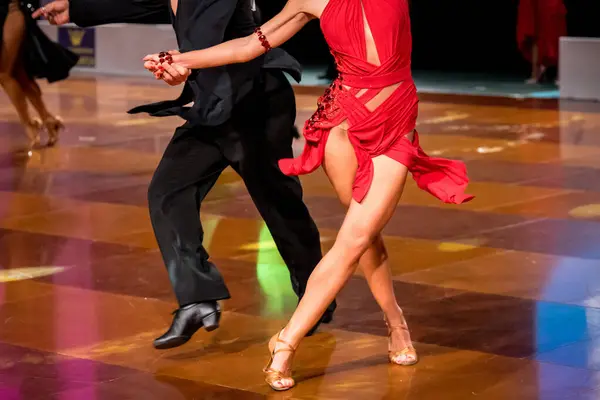
Ballroom dancing addresses all five. That’s the core reason researchers studying emotional health through movement have increasingly focused on partner-based social dance. The National Center for Creative Aging documented in a longitudinal study that social dance outperformed solo exercise on measures of mood stabilization and sense of belonging — not because dancing is special in a mystical sense, but because it stacks multiple emotional inputs within a single activity.
Understanding which of those inputs drives which emotional benefit tells you what you’re actually signing up for when you register for a beginner class — and whether it matches the specific problem you’re trying to address.
How Ballroom Dancing Reduces Stress at a Physiological Level
Cortisol is the body’s primary stress hormone. Most people know that. Fewer people notice the distinction between a temporary post-workout cortisol dip and a genuine reduction in baseline cortisol — the amount circulating in your system on an ordinary weekday morning before you’ve done anything stressful.
A 2017 study published in Frontiers in Psychology examined cortisol levels in regular social dancers versus non-dancers and found that dance participants showed lower baseline cortisol — not just lower post-activity levels. That distinction matters practically. Regular ballroom dancing appears to recalibrate the setpoint, not just offer a temporary break from stress.
Why the Music Component Matters Physiologically
Music alone lowers cortisol. Researchers at the University of Gothenburg found that listening to self-selected music before a stressful task reduced cortisol response by roughly 65% compared to silence. Ballroom dancing stacks rhythmic music with physical movement and cooperative social engagement simultaneously — three cortisol-modulating inputs in a single session.
Argentine tango has attracted particular research attention here. A 2008 study in the Journal of Alternative and Complementary Medicine compared Argentine tango with meditation and found both reduced cortisol and depression symptoms. Tango participants also reported higher social satisfaction than the meditation group — a result researchers have since replicated in smaller studies.
Physical Contact and the Oxytocin Connection
Nonsexual physical touch — the kind that occurs naturally in partner dancing — triggers oxytocin release. Oxytocin directly suppresses cortisol activity. A 2010 review in Psychological Science confirmed that touch from a familiar person measurably reduces cortisol response to stress under controlled conditions. After several weeks of regular lessons with the same partner or instructor, that relationship is established enough to trigger this effect reliably.
How Long Before You Notice a Difference
Typically, dancers report noticeable mood changes within 4–6 weeks of consistent twice-weekly practice. Measurable cortisol reductions in research settings appear at around the 8-week mark. Not immediate — but faster than most people expect from a non-pharmacological approach to chronic stress.
Social Anxiety and the Partner Effect
Social anxiety is often described as shyness, but that framing misses the mechanism. It’s more accurately a fear of unscripted social evaluation — the dread of saying or doing something wrong in front of others when there’s no clear social script to follow.
That framing explains why partner dancing works for social anxiety where other group activities often don’t. Ballroom dancing gives you a script. You know what to do with your body, where your hands go, what the next step is, and what the music signals. The cognitive demand of improvised social interaction — the part that overwhelms people with anxiety — is largely removed.
| Activity | Social Engagement | Physical Touch | Structured Interaction | Evidence for Anxiety Reduction |
|---|---|---|---|---|
| Ballroom Dancing | High — partner plus group class | Yes | Yes — steps, timing, holds | Moderate to strong |
| Yoga | Low to moderate | Rare | Moderate — instructor-led sequence | Strong for general anxiety |
| Group Running | Moderate — parallel, not cooperative | No | Low | Moderate (general exercise effect) |
| Group Fitness Classes | Low — same room, not interacting | No | Low | Moderate |
| Improv Theater | Very high | Occasional | Low — deliberately unscripted | Emerging, limited data |
The structured interaction column is the most important differentiator for anxiety specifically. A 2009 study from Goldsmiths, University of London found that participants who completed an 8-week social dance program showed statistically significant reductions in social anxiety scores. The researchers attributed the effect largely to the predictable, rule-governed nature of partner interaction in dance — exactly the kind of social scaffolding that people with anxiety often lack in daily life.
Does Ballroom Dancing Actually Help With Depression?
What does the evidence actually show?
Cautiously, yes. A 2019 meta-analysis in The Arts in Psychotherapy reviewed 23 studies and found that dance movement therapy produced moderate effect sizes on depression symptoms measured by standardized tools including the Beck Depression Inventory and the PHQ-9. Social dance — the category that includes ballroom — was among the more consistently effective formats, particularly in community rather than clinical populations.
Why might dancing do more than walking for depression?
Cardio helps with depression. That’s well-established. But depression commonly runs on a social withdrawal loop: isolation deepens low mood, which produces more isolation. Ballroom dancing interrupts that loop directly. You have to show up, make physical contact with another person, and sustain attention on something external for the full duration of the lesson.
That external focus is therapeutically significant. Rumination — the repetitive, self-directed negative thinking at the center of most depressive episodes — requires cognitive bandwidth. Dancing competes for exactly that bandwidth. It’s difficult to spiral mentally while simultaneously tracking your footwork, your partner’s weight shifts, and the rhythm of the music.
Is dancing enough on its own for depression?
Almost certainly not for moderate or severe depression. Most researchers studying dance therapy position it as an adjunctive treatment — something that complements clinical care rather than replacing it. A person managing clinical depression with a psychiatrist or therapist may find that twice-weekly ballroom lessons meaningfully improve their baseline between sessions. For mild, situational depression following major life changes, the evidence for standalone benefit is more direct. That’s where ballroom dancing tends to show its strongest results.
The Confidence Shift Is Real and Transferable
Learning to dance in front of other people is genuinely hard. The first two lessons are humbling for nearly everyone. That difficulty is precisely the point.
When you acquire a visible, social, physically demanding skill and get it right — when you finally nail the timing on a Cha-cha turn or move smoothly through a Waltz — your confidence doesn’t stay contained to the dance floor. Research by Albert Bandura at Stanford on self-efficacy transfer found that mastering a challenging task in one domain measurably increases belief in one’s ability in unrelated areas. Most dancers report this shift within 8–12 weeks of regular practice. By that point, you can do something visibly impressive that the majority of people around you cannot. That changes how you walk into a room.
Emotional Benefits by Dance Style — Matching the Right Style to Your Situation
Different ballroom styles produce different emotional effects. Tempo, physical hold, musical character, and the degree of improvisation vary enough between styles that researchers and experienced dance educators generally match style to emotional goal. Here’s how the major styles compare:
| Dance Style | Primary Emotional Benefit | Best For | Beginner Difficulty |
|---|---|---|---|
| Argentine Tango | Stress reduction, emotional attunement, present-moment focus | Anxiety, emotional numbness | Moderate-high |
| Waltz | Calm, flow state, gentle euphoria from sustained rotation | General mood elevation, stress relief | Low-moderate |
| Cha-cha | Energy, playfulness, confidence | Low energy states, mild depression | Moderate |
| Rumba | Emotional expression, partner connection | Emotional repression, relationship enrichment | Moderate |
| Quickstep | Joy, spontaneity, high-energy release | Stress relief, playfulness | High |
| Foxtrot | Steadiness, social ease, rhythm development | Social anxiety, first-time dancers | Low |
Argentine Tango Has the Strongest Research Base
Of all ballroom styles, Argentine tango has the most direct research support for emotional benefits. A 2012 University of New England study found tango participants outperformed both exercise-only and mindfulness-only groups on measures of present-moment awareness. The lead-follow dynamic — where partners constantly read each other’s weight and intention — trains attentional skills that transfer outside the studio in ways that straightforward cardio doesn’t replicate.
Start With Foxtrot If Social Anxiety Is the Presenting Issue
If social anxiety is the primary concern, experienced dance educators generally recommend starting with Foxtrot. The tempo is forgiving, the movements are smooth and predictable, and the basic frame is significantly less intimidating than tango’s close embrace. Arthur Murray Dance Studios and Fred Astaire Dance Studios, both operating nationwide across the United States, use Foxtrot as their standard introductory style for adult beginners. That’s not arbitrary — it reflects decades of practical feedback about which style successfully brings anxious first-timers back for a second lesson.
When Ballroom Dancing Is the Wrong Choice
The honest picture of who ballroom dancing doesn’t help is worth stating clearly.
Avoid starting during acute crisis. If you’re in the middle of a depressive episode so severe that leaving the house is genuinely difficult, or if you’re managing active PTSD with triggers around physical proximity or touch, the social demands of a ballroom class can produce the opposite of the intended effect. In those situations, a structured solo practice — yoga, tai chi, or consistent daily walking — builds the baseline stability that makes partner dancing beneficial rather than overwhelming. Ballroom works best as a maintenance and growth tool, not a crisis intervention.
The partner question is a real practical barrier. Most beginners don’t arrive with one. That’s generally fine at established studios — Arthur Murray and Fred Astaire both pair solo students with instructors or rotate partners in group beginner classes. Some community classes, though, expect you to arrive as a pair. Ask before you register.
Consistency determines outcomes more than most people expect. The studies showing measurable emotional improvement used twice-weekly practice schedules. One lesson per month will not produce the results described in the research. If your schedule realistically allows only occasional participation, supplement studio time with structured practice videos on DancePlug (available on iOS and Android) or through USADANCE-affiliated community programs, which typically cost considerably less than private studio instruction.
The most common failure mode isn’t bad instruction or choosing the wrong style. It’s quitting after one uncomfortable beginner class. Feeling awkward in the first lesson is nearly universal — it signals nothing about aptitude. The emotional benefits the research describes typically begin around week four of regular attendance, not week one. Show up for week four before drawing conclusions.
Medical Disclaimer: This content is for informational purposes only and does not constitute medical advice. Always consult a qualified healthcare professional before making health-related decisions.