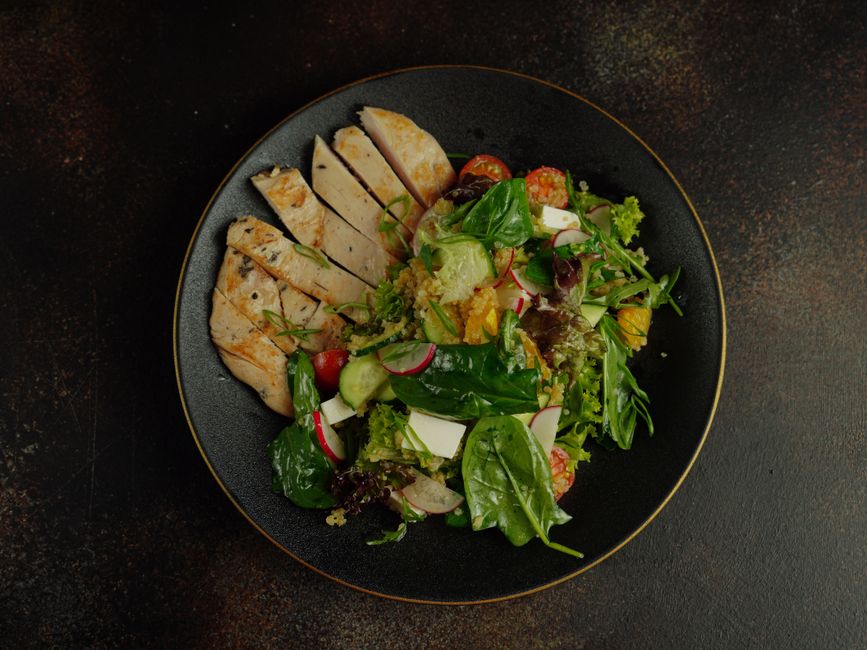
How fiber, color, and protein work together
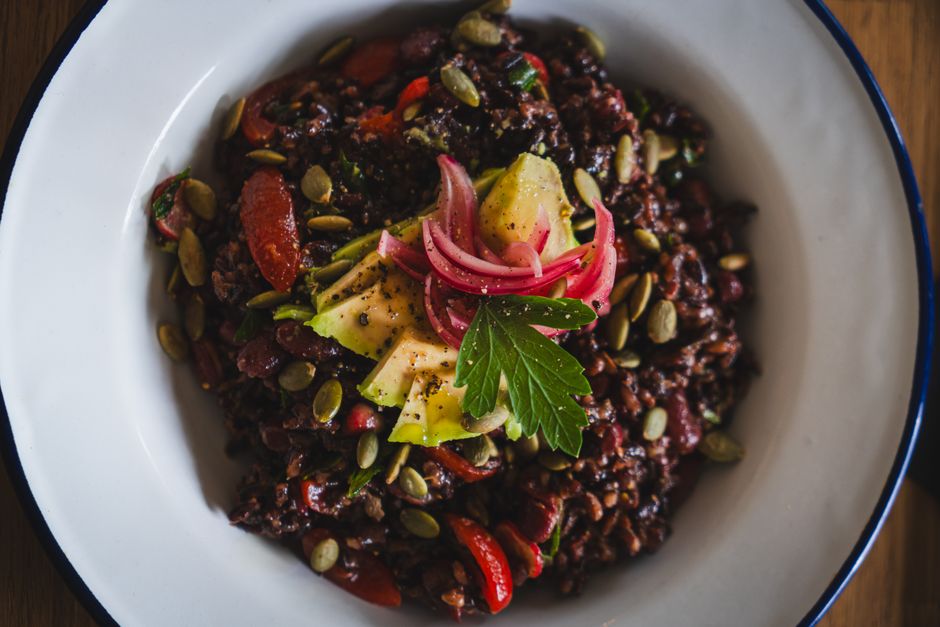
The bowl format exists because it solves a practical problem: several food groups can share one container without requiring a recipe, a saucepan, or a separate side dish. Each part has a job, and the jobs overlap.
Fiber slows the meal down
Beans, lentils, peas, berries, vegetables, and whole grains bring fiber that adds bulk and supports regular digestion. Soluble fiber forms a gel-like texture during digestion, while insoluble fiber adds volume. You do not need to understand the chemistry to use the result: a lunch with beans, vegetables, and a whole grain usually keeps you fuller than the same calories from refined starch alone.
Increase fiber gradually if your current diet is low in it. Jumping from almost no legumes to a huge serving of beans can cause bloating and discomfort. Add water, start with half a cup, and increase over several days.
Color adds variety, not a health halo
Red peppers, purple cabbage, carrots, spinach, tomatoes, and herbs supply different vitamins and plant compounds. Color is a useful shopping shortcut, but it does not turn a bowl into medicine. A beige bowl can still be balanced, and a rainbow bowl can still be short on protein. Use color to widen variety, not to excuse weak meal structure.
Protein gives the bowl staying power
Tofu, eggs, chicken, fish, Greek yogurt sauces, lentils, and beans can all work. Choose the option you can prepare safely and affordably. If the bowl leaves you hungry, increase protein or vegetables before pouring on more dressing. The best combination is fiber plus protein plus enough carbohydrate for the day, not a low-carb contest.
How to assemble a bowl in ten deliberate minutes
My strongest recommendation: prep components, not finished bowls. Fully assembled bowls often turn watery after two days, especially when tomatoes, greens, and dressing sit together. Separate parts stay usable longer and let you change the flavor without cooking a second meal.
Step 1: Start with the base
Cook a batch of brown rice, barley, quinoa, or another whole grain. Portion 1/2 to 3/4 cup cooked grain into each container. If you need more food because you have a physically active job, increase the portion deliberately instead of grazing later. The same rule applies if you need less: reduce the grain slightly, but keep protein and vegetables present.
Step 2: Add the two anchors
Place 3 to 4 ounces of protein beside the grain, then add at least 1 1/2 cups of vegetables. Mix cooked and raw vegetables when possible. Roasted carrots or broccoli bring sweetness and warmth; cabbage, cucumber, or peppers add crunch. Rinse canned beans, drain tofu well, and cool cooked food before sealing containers. That small food-safety step protects texture and reduces the chance of a warm, wet container sitting in the refrigerator.
Step 3: Finish after reheating
Keep dressing, herbs, seeds, and crunchy toppings in a separate small container. Heat the grain, protein, and sturdy vegetables first. Add delicate greens and dressing afterward. A lemon-tahini sauce, salsa, yogurt-herb dressing, or vinegar-based sauce can change the personality of the same base without adding a full new recipe.
Plan three lunches, not seven. Three containers give you structure while leaving room for leftovers, a restaurant meal, or a day when your schedule changes.
Are convenience foods worth the extra cost?
Convenience is not a nutrition failure. The question is what the convenience buys you and what it quietly removes. A microwave grain pouch can save ten minutes; it may also cost more per serving and contain 300 to 600 milligrams of sodium. Frozen vegetables can be an excellent value because they reduce waste, but a sauce-heavy vegetable blend may add sugar or salt. Read the label once, then decide with numbers.
Three useful shortcuts
- Best value: dry grains, canned beans, and frozen plain vegetables. They usually give the lowest cost per serving and the most control.
- Best time saver: Seeds of Change Organic Quinoa & Brown Rice at roughly $3.48 per pouch. Use half the pouch when you need a smaller bowl, and pair it with a protein source.
- Best flavor shortcut: Sabra Classic Hummus, often around $4.48 for a 10-ounce tub. One tablespoon can replace a heavier dressing, but measure it because the calories rise quickly with large scoops.
The budget reality
A home-built bowl often lands near $3.00 to $6.50, depending on protein. A prepared salad can cost $9.00 to $15.00 before delivery fees. Grocery delivery may add a $0 to $9.99 service or delivery charge, so check the final total rather than the menu price. A lunch bowl has no APR, annual fee, or credit terms; if you carry grocery spending on a card charging 24% to 30% APR, interest can erase the savings. This is not financial advice. It is a reason to compare the complete cost of convenience.
Bottom line: buy convenience when it prevents skipped meals, but choose plain versions when you want better control over sodium, portions, and cost.
Questions people ask before building lunch bowls
Can a bowl contain too much fiber?
Yes. A very large serving of beans, bran, cruciferous vegetables, and seeds can produce gas, cramps, or a heavy feeling, especially if your usual intake is low. Begin with 1/2 cup of beans and one cup of vegetables, drink water, and increase slowly. For a gentler first step, use cooked vegetables and a smaller grain portion. The best fiber plan is the one your digestion accepts.
What if I do not eat meat?
Use tofu, tempeh, eggs, Greek yogurt, lentils, beans, or edamame. A bowl with 3/4 cup lentils plus a grain can provide a substantial protein base, but check your total intake across the day. Goya black beans are a cheap option; Eden Organic No Salt Added Garbanzo Beans, often about $2.49 for a 15-ounce can, offer another pantry choice with no meat required. Rinse canned beans to reduce surface sodium.
Are salad kits a balanced bowl by themselves?
Usually no. Taylor Farms Mediterranean Crunch Chopped Salad Kit may cost around $4.98 for a 12.8-ounce bag, but many kits provide vegetables and dressing without enough protein or a durable carbohydrate source. Add beans, chicken, tofu, eggs, or fish, and use only part of the dressing packet if the sodium or calorie count is high. The kit can be the vegetable layer, not the whole meal.
My clear answer is to use packaged foods as building blocks, never as proof that the bowl is balanced.
Common bowl mistakes and the final recommendation
Most lunch-bowl failures are predictable. Fix the structure before blaming willpower.
- Too little protein: A bowl of grains and vegetables may look generous but can leave you hungry. Add a measured protein portion before adding more sauce.
- Unmeasured dressing: Two large pours can add more calories than the grain. Start with one tablespoon, taste, and add only if needed.
- All soft textures: Warm grains, beans, steamed vegetables, and creamy sauce can feel monotonous. Add cabbage, seeds, cucumber, or toasted nuts for contrast.
- Ignoring sodium: Canned beans, sauces, deli meats, and frozen entrees can stack salt quickly. Choose low-sodium products, rinse beans, and use acid, herbs, garlic, or chili for flavor.
- Preparing too far ahead: Seven identical bowls can become an expensive waste pile. Prep three lunches and keep wet ingredients separate.
- Using color as a substitute for balance: Purple cabbage and red peppers are valuable, but they do not replace protein or a satisfying carbohydrate portion.
Do not buy a specialty meal-prep system for this. A regular container, a small sauce cup, and a reliable grocery list are enough. For the lowest-cost plan, use beans, brown rice, frozen broccoli, and one strong sauce. For the fastest plan, use a grain pouch, prewashed vegetables, and a ready protein. For the best overall weekday choice, build three bowls with 20 to 35 grams of protein, 8 to 12 grams of fiber, half a container of vegetables, and dressing measured by spoon.
That is the recommendation: make the bowl boringly structured and interesting in flavor. Fiber provides the base, color keeps variety alive, and a deliberate protein portion gives lunch a better chance of carrying you to dinner.
Medical Disclaimer: This content is for informational purposes only and does not constitute medical advice. Always consult a qualified healthcare professional before making health-related decisions.