
About one in three fitness tracker owners stops wearing their device within six months of buying it. Not because the hardware broke — because the data it collected never translated into anything actionable. That gap between wearing a tracker and actually using it is the real test for any device in this category: does it give you information you can act on, or just accumulate numbers in an app?
The Max Go fitness tracker sits in the sub-$50 tier alongside the Xiaomi Smart Band 8, Honor Band 7, and the entry-level Fitbit Inspire 3. The competition at this price is genuinely stiff. This review covers what the Max Go gets right, where it cuts corners, how to configure it for useful data from day one, and — when it matters — when you should buy something else instead.
How to Read Fitness Tracker Data That Actually Moves the Needle
Most people glance at their step count, maybe check heart rate after a run, and call it done. That approach leaves the majority of the value sitting unused in the app.
Step count is a movement floor, not a fitness metric. 10,000 casual steps does little for cardiovascular adaptation in anyone with baseline fitness. The three numbers worth tracking are resting heart rate, heart rate zone distribution during workouts, and sleep stage consistency across rolling 7-day averages.
Resting Heart Rate: Your Daily Physiological Barometer
A typical untrained adult sits at 60–80 bpm resting heart rate. Consistent aerobic training pushes that number down over weeks and months — elite endurance athletes routinely measure 40–50 bpm. Your tracker samples this overnight by averaging the lowest readings during sleep, which eliminates the noise from daytime movement and stress response.
The pattern worth watching: a sustained downward trend over 6–12 weeks signals real cardiovascular adaptation. A sudden spike of 5+ bpm above your personal 7-day baseline often predicts incoming illness or accumulated training fatigue 24–48 hours before you feel symptoms. That early warning signal alone justifies wearing a tracker — but only if you’re checking the trend line, not just today’s number.
The Max Go tracks resting heart rate continuously during sleep and surfaces a trend view in its companion app. The hardware supports this use case adequately. The weak point, which is addressed directly in a later section, is how much the app helps you interpret that trend.
Heart Rate Zones: Why the Default Formula Fails Most Users
Every budget fitness tracker defaults to using 220 minus your age as your estimated maximum heart rate. Zone 2 becomes 60–70% of that number. The problem: the 220-minus-age formula carries a standard deviation of roughly ±12 bpm, which means it can be off by 24 beats in either direction for a meaningful portion of the population. Training to someone else’s physiology produces unreliable results.
A more accurate method: find your functional threshold heart rate by averaging your heart rate over the final 5 minutes of a 20-minute all-out effort — running, cycling, or rowing works. Zone 2 is approximately 70–80% of that number. One testing session gives you boundaries that match your actual cardiovascular response.
The Max Go supports custom heart rate zone inputs. Set yours accurately from the start and every zone-based workout metric the app shows becomes useful training data. Use the defaults and you’re working with numbers calibrated for a hypothetical average person, not you.
Sleep Stages: What Consumer Trackers Can and Cannot Measure
No wrist-based consumer tracker measures sleep stages with clinical accuracy. Real sleep staging requires EEG electrodes. What fitness trackers do is estimate light, deep, and REM phases from heart rate variability patterns and wrist movement — an approximation that is useful for trend tracking even if individual nights contain noise.
Healthy adults typically spend 20–25% of total sleep time in deep sleep. Watch the 7-day rolling average on your tracker, not any single night’s reading. A sustained drop in deep sleep percentage over 10 or more consecutive nights is a pattern worth investigating. One rough night is just noise.
Max Go at a Glance: Specs vs. Direct Competitors
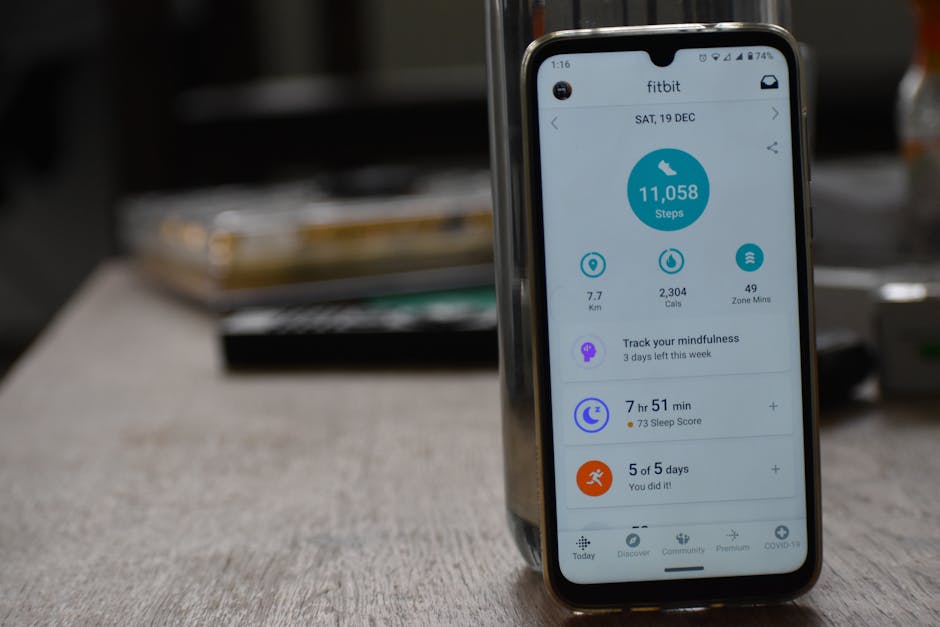
At this price tier, most trackers hit the same feature checklist. The meaningful differences surface in display quality, real-world battery life, and the depth of the app ecosystem.
| Feature | Max Go | Xiaomi Smart Band 8 | Fitbit Inspire 3 | Honor Band 7 |
|---|---|---|---|---|
| Display | Color TFT touchscreen | AMOLED, 1.62″ | AMOLED, 0.84″ | AMOLED, 1.47″ |
| Battery (advertised) | 7–10 days | 16 days | 10 days | 14 days |
| GPS | Connected (phone required) | Connected (phone required) | Connected (phone required) | Connected (phone required) |
| SpO2 sensor | Yes | Yes | Yes | Yes |
| Sleep tracking | Light / Deep / REM | Light / Deep / REM | Light / Deep / REM + readiness score | Light / Deep / REM |
| Water resistance | IP68 | 5ATM | 5ATM | 5ATM |
| Approximate price | $30–$45 | $40–$50 | $75–$80 | $45–$55 |
The gap between AMOLED and TFT displays is more noticeable outdoors than spec sheets suggest. In direct sunlight, AMOLED panels remain readable while TFT panels wash out significantly. If you regularly check stats mid-run or during outdoor cycling, that display difference affects daily usability more than any other spec on this list.
Setting Up the Max Go for Accurate Data From Day One
Factory defaults are calibrated for a generic user profile. Fifteen minutes of initial setup produces meaningfully better data quality across every metric the tracker captures.
- Enter accurate biometrics. Height, weight, age, and biological sex all feed into calorie burn calculations. If the app supports custom stride length, measure yours: count your steps over a 100-foot (30-meter) distance, calculate the average, and enter it. This improves step accuracy for both outdoor and treadmill use.
- Wear it on your non-dominant wrist. Your dominant wrist generates more incidental movement during tasks, which inflates step counts through false positives. Non-dominant wrist is the standard recommendation across all consumer trackers.
- Tighten the band one notch during exercise. Loose contact between the optical sensor and skin is the leading cause of inaccurate heart rate readings. The sensor needs consistent skin contact to function reliably. Loosen it for all-day wear to avoid circulation issues.
- Enter custom heart rate zones. Use your personal threshold test result, not the age-based estimate. This single change makes every zone-based workout metric the Max Go displays accurate for your physiology instead of a population average.
- Disable non-essential notifications. Each vibration alert triggers the motion sensor, and nighttime alerts can interrupt sleep stage estimation. Keep workout mode alerts and high heart rate alarms; turn off social media and email pings entirely.
- Start and stop workout mode manually. Auto-detection of exercise type frequently misclassifies activity and gets start and end timestamps wrong, which skews your heart rate zone distribution for that session. A manual tap takes two seconds and keeps your training log accurate.
The App Is the Max Go’s Weakest Link

The companion app syncs data reliably but offers thin trend visualization compared to the Fitbit platform or even Zepp, which powers Xiaomi and Amazfit devices. You get raw numbers without the contextual analysis that turns daily readings into usable patterns over weeks. For meaningful trend analysis, connect the Max Go to Google Fit or Apple Health as an aggregation layer and use those platforms’ charting tools instead.
Max Go vs. Fitbit Inspire 3 vs. Xiaomi Smart Band 8: A Direct Verdict
For most buyers comparing devices in this price range, the Xiaomi Smart Band 8 is the stronger hardware purchase at roughly the same cost as the Max Go. The AMOLED display is visibly better in outdoor conditions. Real-world battery life runs approximately 10–12 days under typical use — roughly double what the Max Go delivers under similar conditions. And Zepp App integration provides significantly more analysis depth than the Max Go’s native companion software.
The Fitbit Inspire 3 costs $30–$35 more, and that premium buys something specific: Fitbit’s app ecosystem. The daily readiness score synthesizes sleep quality, resting HR, and heart rate variability into a single morning recovery metric. Active Zone Minutes weight exercise by intensity rather than just duration. If you’ll engage with that analysis layer, the price difference is justified. If you’ll ignore it, save the money and get the Xiaomi.
Where the Max Go earns its place: when price is the hard constraint. Under $40, it covers every core tracking function — HR, sleep, steps, SpO2, GPS via phone — with adequate reliability. It makes sense as a primary device for budget-first buyers, as a backup tracker, or as a gift for someone testing whether fitness tracking fits into their routine before spending more.
One category where none of these trackers help: runners who need standalone GPS without carrying a phone. All four devices in this comparison use connected GPS, which requires your phone to stay within Bluetooth range for route mapping. The Garmin Forerunner 165 ($250) is the entry point for built-in GPS from a brand with reliable satellite acquisition — but that’s a different budget category entirely and worth its own evaluation.
Five Ways Fitness Tracker Data Gets Misused
- Eating to calorie burn numbers. Stanford research found wrist-based optical HR sensors produce calorie burn errors of 20–40% compared to metabolic testing. Use these figures for relative comparison between sessions, never as absolute targets for intake decisions.
- Treating step goal completion as fitness progress. Hitting 10,000 steps during a slow-paced day does not constitute cardiovascular training for anyone with a baseline fitness level. Steps measure whether you moved; they don’t measure whether you adapted.
- Scrolling past resting HR spikes. A 5-bpm increase above your personal 7-day baseline is one of the most actionable signals in consumer fitness tracking. Most users tap past it. It often means back off training that day.
- Comparing step counts between devices. A Fitbit and a Xiaomi Band worn simultaneously will report different step counts for the same walk. Each uses a proprietary accelerometer algorithm. Neither is definitively correct — consistency within a single device ecosystem is the relevant metric, not cross-device comparison.
- Acting on single-night sleep data. One night of poor deep sleep is noise. Ten consecutive nights of declining deep sleep percentage is a pattern worth investigating. The timescale on which sleep data becomes meaningful is weeks, not days.
Which Activities Does the Max Go Actually Handle Well?
Walking, casual running, and cycling?
Yes, with realistic expectations. Optical HR tracking is most accurate during steady-state cardio at low-to-moderate intensity, where arm movement is relatively consistent and the sensor maintains reliable skin contact. The Max Go handles walking and cycling reasonably well for effort monitoring and session duration. Connected GPS delivers accurate route data when your phone is with you. Without your phone, you’re relying on stride-length estimation for distance, which is less precise but functional for pace-awareness during a solo run.
Strength training and HIIT?
No optical HR tracker placed on your wrist delivers reliable data during barbell movements, heavy dumbbell work, or any compound lift that involves complex wrist positions. During a bench press, deadlift, or overhead movement, the sensor loses consistent skin contact and returns artifact-filled readings that can be 15–25 bpm off actual heart rate. This is not a Max Go-specific limitation — it applies across every device in this category. For accurate HR during strength sessions, the Polar H10 chest strap ($90) connects via Bluetooth to most smartphones and eliminates the contact problem entirely. Use the Max Go for session logging and duration tracking in the gym; ignore the HR data during lifting sets.
Sleep and recovery monitoring?
Functional, with caveats. The Max Go captures light, deep, and REM estimates alongside SpO2 overnight — the raw data you need for trend tracking. The limitation is app-side interpretation. Fitbit’s Inspire 3 packages the same underlying data into a daily readiness score that contextualizes how your sleep quality affects that day’s recommended training load. The Max Go gives you the numbers; figuring out what they mean across weeks requires more manual pattern recognition on your part.
Whichever tracker you use, the single most useful habit is checking your resting heart rate trend every morning before looking at anything else — that one number captures more about your daily recovery status than all the sleep stages and step counts combined.
Medical Disclaimer: This content is for informational purposes only and does not constitute medical advice. Always consult a qualified healthcare professional before making health-related decisions.


