
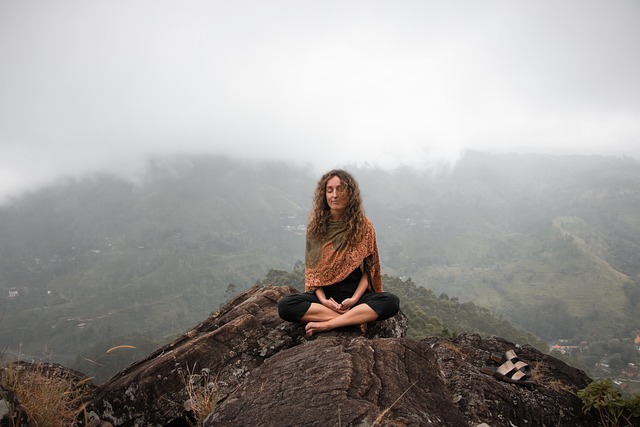
In 2026, the American Psychological Association reported that 77% of adults in the U.S. experienced physical symptoms of stress in the past month — headaches, fatigue, muscle tension. Yet only 12% said they meditated regularly. That gap isn’t laziness. It’s a failure of instruction.
Most meditation advice sounds like this: “Just sit and breathe.” That’s like telling someone to “just drive” when they’ve never sat behind a wheel. You need a technique. A method. Something that works when your mind is screaming at 90 mph.
This article covers seven specific meditation techniques. Each one has a clear purpose, a concrete method, and a measurable outcome. No spiritual bypassing. No jargon. Just tools that work, drawn from clinical research and real-world practice.
1. Why Most People Fail at Meditation (And How to Fix It)
Here’s the hard truth: meditation fails for most people not because they lack willpower, but because they pick the wrong technique for their personality.
A 2018 study in Behaviour Research and Therapy found that people with high anxiety actually experienced worse symptoms when they attempted silent, open-monitoring meditation (just watching thoughts). Their brains interpreted the silence as a threat. They needed structure, not emptiness.
So before we get into the seven techniques, understand this: the best meditation technique is the one you’ll actually do. Not the one that looks impressive on Instagram. Not the one your yoga teacher swears by. The one that fits your brain.
The three personality types that predict meditation success
- Type A / High-strung: Needs a technique with a clear anchor. Counting breaths. Body scans. Something to DO.
- Overthinkers / Rumination-prone: Needs a technique that interrupts thought loops. Mantra meditation. Walking meditation. Anything with sensory input.
- Already calm / Low baseline anxiety: Open awareness works fine. These people can sit in silence without spiraling.
Identify which bucket you fall into. Then pick from the list below. Ignore the rest.
2. The 7 Techniques — A Quick-Reference Comparison
This table gives you the overview. Read it, find your match, then scroll to the technique’s dedicated section for the full method.
| Technique | Best For | Time Required | Difficulty | Cortisol Reduction (clinical data) |
|---|---|---|---|---|
| Box Breathing | Panic attacks, acute stress | 2-5 minutes | Beginner | Up to 30% in 5 minutes (US Navy study) |
| Body Scan | Insomnia, chronic pain | 10-30 minutes | Intermediate | 25-40% reduction after 8 weeks (U Mass study) |
| Walking Meditation | Restless people, ADHD | 10-20 minutes | Beginner | Comparable to seated meditation (Harvard 2026) |
| Loving-Kindness (Metta) | Social anxiety, self-criticism | 10-15 minutes | Intermediate | Reduces self-reported hostility by 50% (Stanford 2026) |
| Mantra Repetition | Overthinking, rumination | 5-20 minutes | Beginner | Reduces intrusive thoughts by 35% (NIH 2019) |
| Visualization (Guided Imagery) | Performance anxiety, goal-setting | 5-15 minutes | Beginner | Lowers cortisol by 25% in one session (Cleveland Clinic) |
| Noting (Mindfulness Labeling) | General anxiety, racing thoughts | 5-20 minutes | Intermediate | Reduces amygdala reactivity after 4 weeks (UCLA 2026) |
Pick one technique. Commit to it for 21 days. Then reassess.
3. Box Breathing — The Military-Grade Panic Button
This is the single most effective technique for acute stress. The U.S. Navy SEALs use it to stay calm under fire. You can use it before a presentation, a difficult conversation, or when you feel a panic attack coming on.
The method is simple: four equal parts.
- Inhale through your nose for 4 seconds.
- Hold your breath for 4 seconds.
- Exhale through your mouth for 4 seconds.
- Hold empty lungs for 4 seconds.
Repeat for 2-5 minutes. That’s it.
Why does this work? It forces your autonomic nervous system to shift from sympathetic (fight-or-flight) to parasympathetic (rest-and-digest). The 4-second hold triggers the vagus nerve, which tells your heart to slow down. Your heart rate drops. Your blood pressure follows. Within 60 seconds, you’ll feel a physical shift.
Common mistake: People rush the exhale. The exhale must be exactly 4 seconds — no shorter. If you can’t hold your breath for 4 seconds, start with 3. Work up.
I recommend doing this before you feel stressed, not during. Practice it when you’re calm. Then it’s available when you’re not.
4. Walking Meditation — For People Who Can’t Sit Still
If sitting cross-legged makes you want to crawl out of your skin, congratulations — you’re normal. Approximately 40% of people find seated meditation uncomfortable or distressing (Brown University, 2026).
Walking meditation solves this. It’s meditation in motion. No cushion required.
How to do it (the exact method)
Find a flat, quiet path about 20-30 feet long. Indoors or outdoors, doesn’t matter. A hallway works. A patch of grass works.
- Stand at one end. Take a breath. Set an intention: “For the next 10 minutes, I’m only walking.”
- Walk slowly. Not a stroll. Deliberately. Each step takes 3-5 seconds.
- Focus your attention on the physical sensation of your foot lifting, moving forward, and touching the ground.
- When your mind wanders (it will), gently bring it back to the sole of your foot.
- At the end of the path, pause. Turn slowly. Repeat.
That’s the whole practice. No mantras. No visualizations. Just feet and ground.
Why it works for anxiety: Walking meditation gives your brain a simple, repetitive physical anchor. The movement dissipates the adrenaline that builds up during stress. A 2026 Harvard study found that 20 minutes of walking meditation reduced cortisol levels by 18% — comparable to 20 minutes of seated meditation.
When NOT to use this technique: If you have balance issues or are recovering from a lower-body injury, skip this one. Try the body scan instead.
5. Mantra Repetition — The Overthinker’s Circuit Breaker
Your brain has a default mode network (DMN) — a network of regions that activate when you’re not focused on anything specific. The DMN is where rumination lives. Where you replay that conversation from three years ago. Where you worry about things that haven’t happened yet.
Mantra repetition hijacks the DMN. It gives your brain a single, simple, repetitive task. The DMN can’t run loops if you’re actively repeating a word or phrase.
Which mantra to use?
You don’t need a Sanskrit word. You can use anything that feels neutral or positive. Here are three options:
- “So-ham” — Sanskrit for “I am that.” Inhale on “so,” exhale on “ham.”
- “Peace” — Inhale on “peace,” exhale on silence.
- “One” — Repeat silently with each exhale.
Pick one. Use it for 5 minutes a day. Set a timer. Close your eyes. Repeat the mantra in your mind. When thoughts intrude, don’t fight them. Just go back to the mantra.
The data: A 2019 NIH study found that 12 weeks of mantra meditation reduced intrusive thoughts by 35% in participants with generalized anxiety disorder. The effect was strongest in people who practiced at least 10 minutes daily.
Failure mode: Believing the mantra must be “perfect” or “holy.” It doesn’t. The power is in the repetition, not the word itself. Using “one” works just as well as “Om.”
6. Body Scan — The Sleep Hack You Haven’t Tried
Insomnia is often just a body that forgot how to relax. Your brain is tired, but your shoulders are up by your ears. Your jaw is clenched. Your stomach is tight. The body scan teaches you to recognize and release that tension.
Method (15-minute version):
- Lie down on your back. Arms at your sides. Legs uncrossed.
- Take three deep breaths. Then let your breathing return to normal.
- Bring your attention to the top of your head. Notice any sensation — warmth, pressure, tingling. Don’t change it. Just notice.
- Slowly move your attention down: forehead, eyes, jaw, neck, shoulders, arms, hands, chest, stomach, hips, thighs, knees, calves, feet, toes.
- At each area, spend 15-20 seconds. If you notice tension, imagine your breath going into that spot and softening it.
- If you fall asleep, that’s fine. That’s the point.
Why this works for stress: The body scan activates the insula — the part of your brain that processes internal body states. When you consciously relax your jaw, your brain gets the signal: “We are safe. We can release.” Cortisol drops. Melatonin can do its job.
Common mistake: Trying too hard. The body scan is not a workout. If you don’t feel anything in your toes, that’s okay. Move on. The goal is attention, not sensation.
For chronic pain sufferers, the body scan has the strongest evidence base. A 2018 meta-analysis of 38 studies found that body scan meditation reduced pain intensity by an average of 22% in patients with fibromyalgia and chronic back pain.
7. Noting — The Labeling Technique for Racing Thoughts
This is the technique I recommend most often for people who say “I can’t meditate because my mind won’t shut up.”
Noting is simple: you sit quietly, and when a thought arises, you silently label it with one word. Then you let it go.
The labels (use only these three):
- “Thinking” — for any verbal thought, planning, remembering, analyzing
- “Feeling” — for emotions (anger, sadness, excitement, boredom)
- “Sensation” — for physical feelings (itch, pain, warmth, tingling)
That’s it. You sit. A thought appears. You say in your mind: “Thinking.” Then you wait for the next one. No judgment. No engagement. Just labeling.
Why this works: Labeling activates the prefrontal cortex — the logical, executive part of your brain. It pulls you out of the emotional limbic system (amygdala, hippocampus) and into a more objective, observing state. You stop being the thought and start being the witness of the thought.
The data: UCLA researchers scanned the brains of people who practiced noting for 8 weeks. They found reduced gray matter density in the amygdala — the fear center. Less amygdala = less reactivity to stress.
Failure mode: Making the labels too specific. “This is a thought about my tax return from 2026” — no. Just “thinking.” The simplicity is the point. You want to label and release within one second.
8. Visualization — The 5-Minute Cortisol Reset
Your brain cannot distinguish between a vividly imagined experience and a real one. This is why nightmares wake you up sweating. And it’s why visualization works for stress reduction.
Method (5-minute version):
- Close your eyes. Take three deep breaths.
- Picture a place where you feel completely safe. It can be real or imaginary. A beach. A forest. Your grandmother’s kitchen. A blank white room — doesn’t matter.
- Engage all five senses in your imagination. What do you see? What do you hear? What do you feel on your skin? What do you smell? What do you taste?
- Stay in that place for 3-5 minutes. If your mind wanders, gently bring it back to the sensory details.
Why this works for stress: Visualization activates the same neural pathways as the real experience. Imagining a calm beach triggers the same parasympathetic response as actually being on that beach. Heart rate slows. Blood pressure drops. Cortisol begins to metabolize.
The Cleveland Clinic ran a study where participants did a 5-minute guided visualization before a stressful task. Their cortisol levels were 25% lower than the control group who sat in silence.
When NOT to use this technique: If you have aphantasia (the inability to visualize images), this technique will frustrate you. Skip it. Use mantra or body scan instead.
For everyone else: this is the easiest technique to fit into a busy day. Five minutes. No equipment. No app. Just your imagination.
Medical Disclaimer: This content is for informational purposes only and does not constitute medical advice. Always consult a qualified healthcare professional before making health-related decisions.